
Laphroaig (pronounced la-FROYG) is arguably the most polarizing and distinctive distillery in Scotland. Perched on the rugged south coast of Islay, battered by Atlantic winds and salt spray, it has built its reputation not on compromise, but on character. For over two centuries, Laphroaig has refused to dilute its personality to chase trends, and that fierce independence is exactly why it inspires such devotion—and such strong reactions.
Its famously “love it or hate it” profile is no marketing gimmick. The iodine, seaweed, bandage and medicinal notes that some people find shocking on first sip are the very qualities that others treasure as deeply authentic, a liquid expression of Islay’s wild coastline. At a time when many whiskies are drifting toward safer, sweeter, and more generic flavor profiles, Laphroaig has, as of 2026, leaned further into what makes it unique: bolder peat, richer coastal character, and an uncompromising house style that is instantly recognizable in a blind tasting.
This isn’t about nostalgia for its own sake. By doubling down on its distinctive identity—through more transparently peated releases, cask explorations that amplify its maritime and medicinal core, and a renewed focus on traditional production methods—Laphroaig is offering something the modern whisky drinker craves but rarely finds: honesty. You know exactly what you’re getting in every glass, and that clarity has helped Laphroaig evolve from a curiosity into a global cult icon.
If you’ve ever felt that too many whiskies taste interchangeable, Laphroaig is the antidote. You may not fall in love with it immediately. You might even recoil on that first encounter. But if you’re willing to give it a second or third chance, to sit with it, to let your palate adjust to its smoky, medicinal embrace, you’ll understand why people travel across the world just to stand on its shore and taste it at the source. In a world of safe choices, Laphroaig’s decision to lean even further into its polarizing profile isn’t just bold—it’s exactly what makes it worth seeking out.
The Foundation:
Laphroaig’s origins are far more compelling than a simple “founded in 1815” line on a bottle. Its foundation is a story of necessity, ingenuity, and a bold transition that shaped not just a distillery, but an entire whisky legacy. On the rugged south coast of Islay, the land was originally worked for cattle farming. Barley was grown primarily to feed livestock, and the farm’s survival depended on making the most of every harvest. But in a place where the soil was poor, the climate harsh, and markets distant, farmers needed more than cattle to secure their future.
This is where the shift begins. Instead of using all of their barley as animal feed, the early Laphroaig farmers discovered that the same grain, when malted and distilled, produced a spirit of remarkable character. Quietly, and at first “illicitly,” they began distilling whisky—not as a hobby, but as a strategic response to economic reality. Turning barley into whisky transformed a perishable crop into a valuable, more durable product that could be traded, sold, and stored. It was a way of taking control in an unforgiving environment.
That transition from cattle farming to clandestine distilling was not just opportunistic; it was visionary. These early distillers recognized that the land around them offered more than grazing. The soft, peaty water, the maritime climate, and the peat itself combined to create a style of whisky that was intensely smoky, briny, and unlike anything found elsewhere. In choosing to lean into distillation, they were effectively choosing a new identity for their livelihood and for this corner of Islay.
By 1815, when Laphroaig was officially and legally established as a distillery, the move from farm to still house was complete. What began in the shadows, out of economic necessity and local resourcefulness, had become a legitimate enterprise. That date is not just a legal milestone; it marks the moment when generations of risk-taking and experimentation were finally recognized in the open.
Understanding this foundation matters. Laphroaig was not built by chance or by following trends, but by people who saw a better future in the spirit they were quietly perfecting. That original act of transition—from raising cattle to crafting whisky—set the tone for everything that followed: independence of spirit, a willingness to defy convention, and an unwavering commitment to the distinctive character of Islay. When you taste Laphroaig today, you are not just drinking a whisky founded in 1815; you are experiencing the result of a bold decision to transform a way of life.
What Separates The Laphroaig From Other Islay Distilleries:
While all Islay whiskies carry that familiar signature of smoke and sea, Laphroaig stands defiantly apart. On an island known for bonfires on the beach, brine-soaked air, and gentle maritime peat, Laphroaig is the bottle that raises eyebrows, divides opinion, and quietly earns lifelong devotees. It is, in every meaningful sense, the black sheep of Islay.
Where many Islay malts lean toward campfire warmth and coastal subtlety, Laphroaig is famously more confrontational: chemical, medicinal, and utterly unapologetic. Iodine, seaweed, antiseptic, hospital corridors, bandages, tar, wet earth—these are the notes that show up again and again in the glass. For some, that first dram is a shock. But that shock is exactly the point.
Laphroaig does not try to please everyone; it aims to be unforgettable to the few who are ready for something bold. If you’ve ever felt that many whiskies blend into one another—that they’re pleasant but interchangeable—Laphroaig is your antidote. Its character is so distinctive that once you’ve tasted it, you’ll recognize it blind for the rest of your life.
And this is why its “Black Sheep” status is an advantage, not a flaw. In a world where brands compete to be inoffensive and broadly likable, Laphroaig chooses integrity over compromise. It refuses to round off its corners just to be easier to drink. Instead, it leans into its medicinal peat, its bracing coastal character, and its almost clinical clarity of flavor.
For adventurous drinkers, that difference is magnetic. Laphroaig becomes a rite of passage: the whisky you bring out to test palates, to challenge assumptions, to see who’s ready to step beyond the safe and familiar. And once it clicks—once the iodine and smoke suddenly rearrange themselves into something complex, soulful, and beautiful—there is no going back. Other whiskies remain good. Laphroaig becomes personal.
So yes, among the smoky, sea-sprayed drams of Islay, Laphroaig will always be the odd one out. But if you’re looking for a whisky that makes a statement rather than blending into the background, that black sheep is exactly the one you should be pouring.
Comparison: Islay Peat Spectrum (2026):
| Distillery | Smoke Style | Key Note | Personality |
| Laphroaig | Medicinal / Tarry | Iodine & Seaweed | The “Uncompromising” |
| Ardbeg | Gritty / Industrial | Soot & Lime | The “Aggressive” |
| Lagavulin | Rich / Savory | Lapsang Souchong Tea | The “Sophisticated” |
| Caol Ila | Clean / Coastal | Lemon & Bonfire | The “Consistent” |
Laphroaig Range:
The Laphroaig range heading into 2026 is proof that an Islay icon can evolve boldly without losing its soul. That unmistakable “medicinal” core—the iodine, seaweed, and bandage notes that fans argue about and fall in love with—remains firmly intact. What has changed, and changed dramatically, is everything that now surrounds it.
In the last few years, Laphroaig has leaned into experimentation with a conviction we simply didn’t see a decade ago. Limited runs finished in unconventional casks, small-batch blends that push peat into new territory, and carefully controlled maturation trials have turned their experimental releases into must-try bottlings rather than curiosities. These aren’t gimmicks tacked onto a famous label; they are carefully designed explorations of how far Laphroaig’s signature character can stretch while still being recognisably Laphroaig. For long-time fans, this means fresh reasons to revisit a distillery they thought they already understood. For newcomers wary of full-on peat, it offers gateways—expressions that soften the edges without erasing the identity.
What truly sets the current era apart, however, is the high-profile partnership that has become the talk of the Islay circuit. By collaborating with a widely respected name outside the traditional whisky world, Laphroaig has plugged itself into new audiences and fresh creative energy. This partnership is not just a logo on a box; it influences cask selection, flavour direction, packaging, and even the way stories about each release are told. The result is a run of whiskies that feel contemporary and culturally relevant, yet built on foundations laid in the distillery’s malt floors and warehouses generations ago.
All of this means that as we move toward 2026, Laphroaig isn’t simply adding more bottles to its shelf. It is redefining what a peated Islay range can look like—anchored by that polarising medicinal core, surrounded by experimental releases that invite exploration, and amplified by a partnership that has everyone on Islay, and far beyond, paying close attention. If you thought you knew Laphroaig, this is the moment to look again.
Comparison Table: Which Laphroaig is for you?
| Bottle | Vibe | Key Tasting Notes |
| 10 Year Old | The “Standard” | Seaweed, TCP, Vanilla |
| Lore | The “Rich One” | Ash, Bittersweet Chocolate, Chili |
| Willem Dafoe 14 | The “Collector’s Item” | Dark Cherries, Leather, Heavy Smoke |
| Càirdeas 2026 | The “Connoisseur’s Choice” | Red Fruits, Port Wine, Salted Caramel |
| Quarter Cask | The “Daily Drifter” | Coconut, Banana, Heavy Peat |
The Laphroaig Collectables:
Laphroaig isn’t just a whisky brand; it’s a community, and that is exactly why it has become one of the most active distilleries for collectors. While many distilleries talk about loyalty, Laphroaig has turned it into a living, breathing ecosystem through its “Friends of Laphroaig” program. This strong, ongoing connection with fans doesn’t just create repeat buyers; it cultivates passionate collectors who are emotionally invested in every bottling.
By inviting enthusiasts to become “Friends,” offering them their own square foot of Islay, and keeping them engaged with exclusive releases, tailored events, and behind-the-scenes stories, Laphroaig has built a sense of belonging that few brands can match. Collectors don’t just pick up a bottle because it’s limited; they buy it because it feels like being part of the distillery’s evolving story. The result is a highly active market where special editions, Friends-only releases, and anniversary bottlings are sought after, traded, and treasured.
Laphroaig 16 Year Old The First Editions 2004:
Laphroaig 16 Year Old The First Editions 2004 is extremely limited, with only 119 bottles produced. This particular Single Malt is notable for its rarity and its profile as a single-cask, un-chill filtered, and naturally coloured Laphroaig.
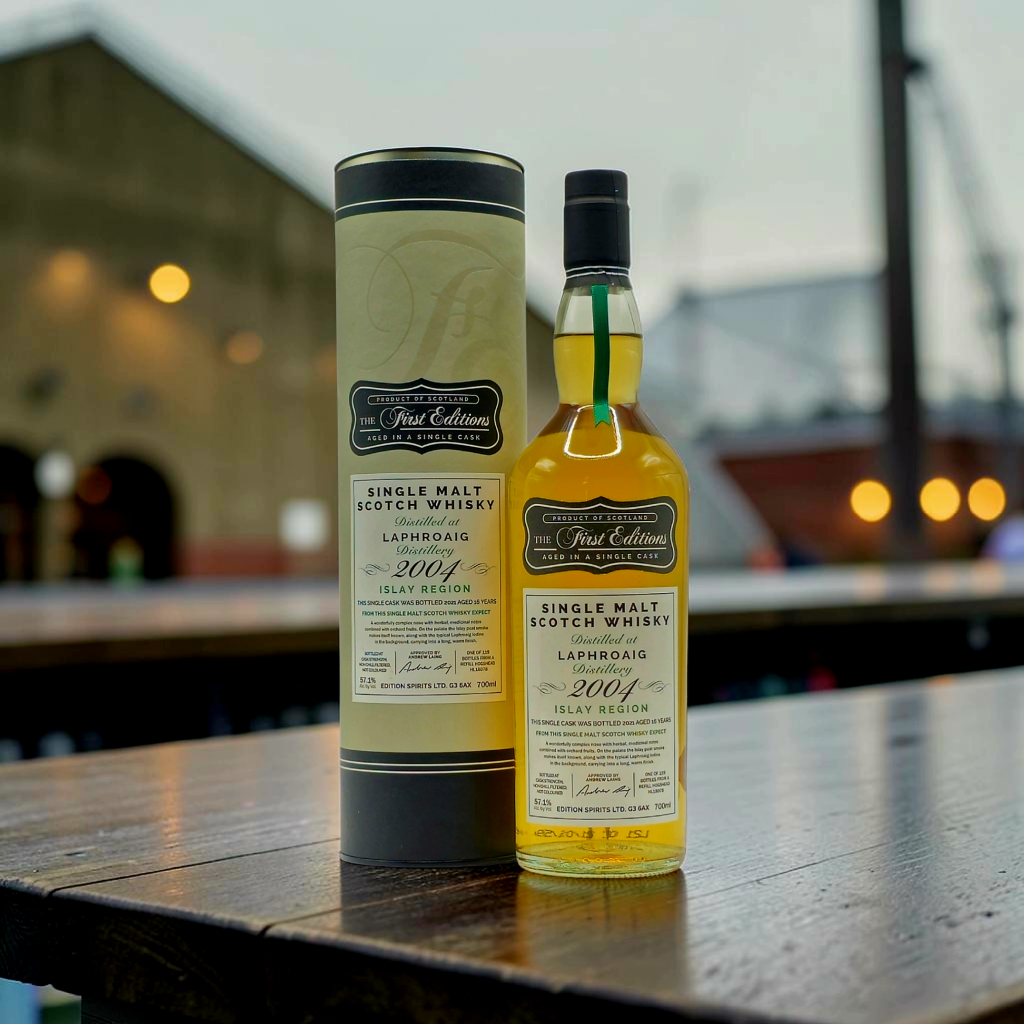
This is a different product from the official Laphroaig 16 Year Old releases that are bottled by the distillery itself. Independent bottlings like The Laphroaig 16 Year Old The First Editions are highly sought after by collectors and enthusiasts for their unique characteristics and often higher proof.
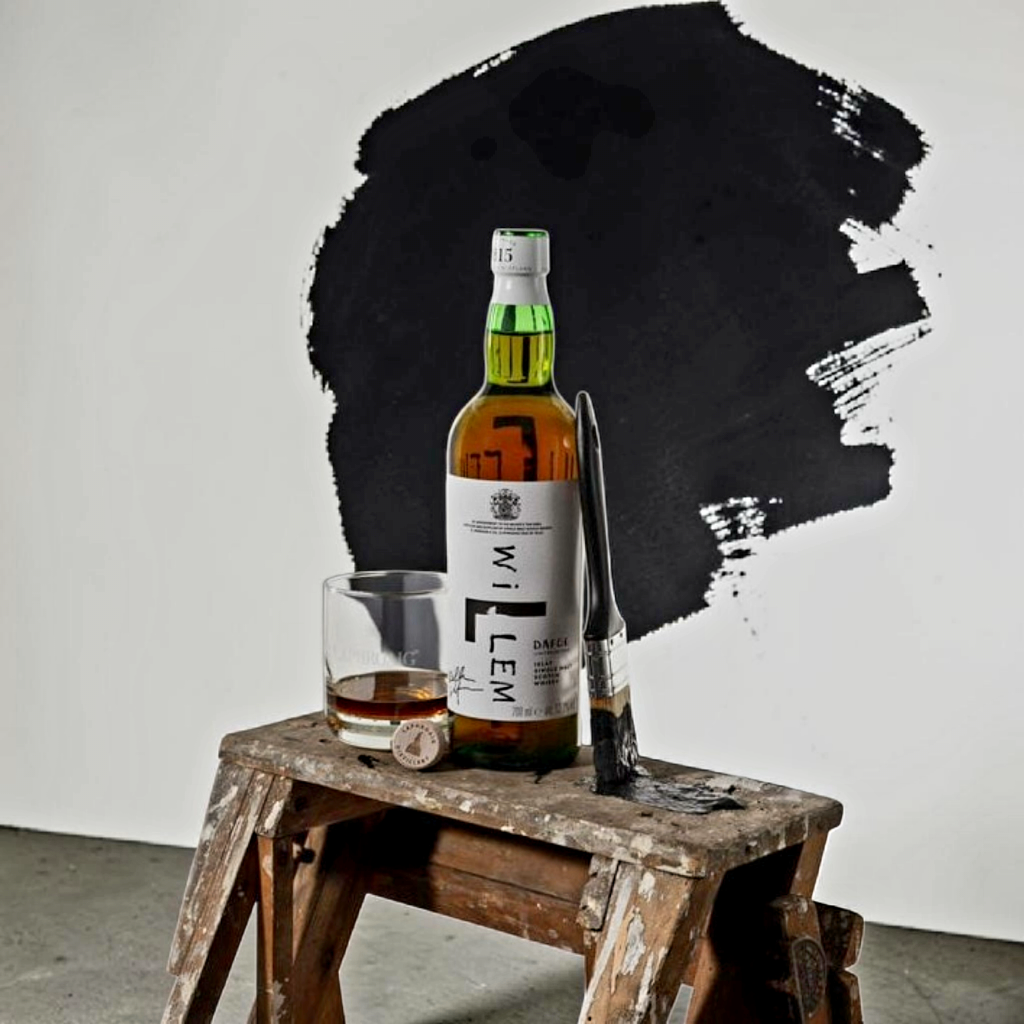
The “Willem by Willem” (Willem Dafoe Edition):
The “Willem by Willem” (Willem Dafoe Edition) isn’t just another limited release. It’s the collectible everyone will be talking about in 2026 – a daring collaboration between Laphroaig and one of cinema’s most magnetic figures, legendary actor and long-time Friend of Laphroaig, Willem Dafoe. This partnership feels inevitable in the best possible way: two uncompromising originals, both famous for intensity, depth, and a refusal to play it safe.
At its heart is a 14-year-old Islay Single Malt that could only come from Laphroaig. Expect that signature maritime peat – iodine, sea spray, and hearth smoke – now layered with a surprising new dimension. The build is finished in Oloroso Sherry casks, bringing a dark, brooding richness that plays beautifully against the distillery’s elemental character. Think dried figs and black cherries meeting smouldering embers; leather-bound books in a dim study; a subtle sweetness that never overpowers the peat, but rather frames it, sharpens it, makes it more dramatic.
This is a whisky designed to feel like a performance in a glass: bold on the nose, complex on the palate, and long, lingering, almost cinematic in its finish. It’s the kind of bottle that invites slow contemplation and conversation – the one you open to mark a moment, or to share with people who will truly appreciate what’s in their glass.
As a collectible, “Willem by Willem” stands out not just for its scarcity, but for its story. This is a meeting of craft and character, of Islay’s wild coast and Hollywood’s most compelling outsider. For serious whisky lovers, Laphroaig devotees, and fans of Willem Dafoe alike, this edition isn’t just worth owning – it’s one you’ll regret missing.
The Element Series:
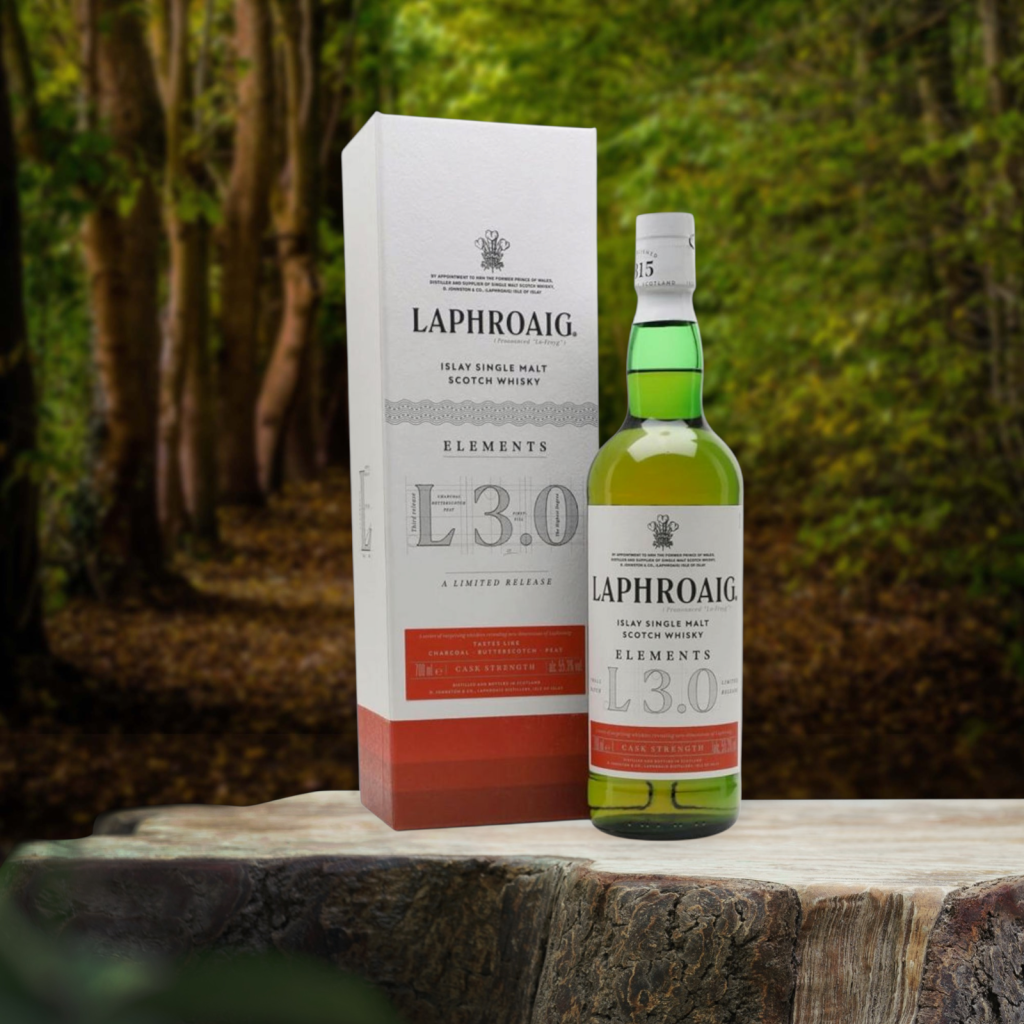
The latest installment is this series the Laphroaig Elements L 3.0.
Distilled under fire — literally — Elements 3.0 is the latest release in Laphroaig’s boundary-pushing series exploring the production quirks that shape its signature style.
This one owes its existence to a kiln fire that burned longer and hotter than usual, altering the malt resting just above it. The whisky was then fully matured in American oak bourbon casks, allowing the intense smoke and unexpected distillation variables to settle into something remarkable.
Laphroaig Elements L 3.0 is a rare glimpse at how Laphroaig’s character shifts when the process itself gets shaken up.
Key Details
Release: The bottling year is 2025.
ABV: It is bottled at cask strength, 55.3% ABV.
Maturation: It was fully matured in ex-bourbon barrels.
Final Words:
The final word on Laphroaig, at least for now, is that we’re witnessing a distillery in motion rather than in stasis. The whisky in the glass is still as unapologetic as ever: the iodine, the peat smoke, the seaweed-and-bandages character that made Laphroaig famous remain firmly intact. That fiercely individual liquid hasn’t softened to chase trends, and it hasn’t been diluted into something generic. If you fell in love with Laphroaig for its boldness, you’ll still recognize it instantly.
What is changing, however, is everything around that liquid. Laphroaig is navigating a period of significant transition because the world around it has changed. Global demand has surged, drinkers are more curious and better informed, and the whisky landscape is more competitive than at any time in recent memory. Standing still isn’t an option for a distillery that wants to be relevant in the next 10, 20, or 50 years.
So the business and brand are evolving. You see it in expanded visitor experiences, in new packaging and communication that speak to a broader, more diverse audience, and in strategic decisions about markets, sustainability, and long-term supply. You may also see experiments at the margins: limited editions, cask finishes, or different age statements that allow Laphroaig to explore new corners of its identity without abandoning its core.
For some long-time fans, “change” can feel unsettling. But in whisky, careful evolution is often the price of survival. Laphroaig isn’t turning its back on what made it iconic; it’s working out how to carry that unapologetic character into a future where tastes, regulations, and expectations are all shifting. The peat, the power, and the medicinal swagger are still there. What’s different is the way the distillery presents itself to the world and the choices it makes to stay competitive and sustainable.
In that sense, this moment of transition should be read less as a warning sign and more as a commitment. Laphroaig is choosing to adapt its business and brand precisely so that it can keep making the kind of whisky that doesn’t try to please everyone—and therefore means so much to the people it does reach. If the liquid remains true, and the evolution around it is thoughtful rather than reckless, this chapter of change may ultimately secure Laphroaig’s future as one of the last truly distinctive voices in Scotch whisky.